No products in the cart.


Shopping cart (0)
Subtotal: ₹0.00
Spend ₹350.00 to get free shipping
Congratulations! You've got free shipping.
Menu
Category
- Advocate Office Essentials
- Apparels – Judges, Sr. Counsel and Lawyers
- Artifacts / Gift Items
- Bare Acts – Central
- Bare Acts – State
- Commentaries
- Administrative Law
- Agriculture
- Arbitration
- Banking Law
- Biographies
- Civil Law
- Company Law
- Constitutional Law
- Consumer Law
- Contract Law
- Corporate Law
- Court Rules
- Criminal Law
- Cyber Law
- Family Law
- Intellectual Property
- Labour & Service Law
- Drafting, Pleading and Conveyancing
- Child Advocacy & POCSO
- Bankruptcy & Insolvency
- Shipping & Maritime Law
- Medical Law
- Motor Vehicles Law
- Others
- Tax Laws
- Dictionaries
- Digest
- Journals
- Regional
- Students Corner
- Trophies
- International Books
No products in the cart.
Shopping cart (0)
Subtotal: ₹0.00
Spend ₹350.00 to get free shipping
Congratulations! You've got free shipping.
No products in the cart.
Shopping cart (0)
Subtotal: ₹0.00
Spend ₹350.00 to get free shipping
Congratulations! You've got free shipping.
Menu
Categories
- Advocate Office Essentials
- Advocates Shop
- Apparels - Judges, Sr. Counsel and Lawyers
- Apparels - Judges,Sr. Counsel and Lawyers
- Artifacts / Gift Items
- Bare Acts - Central
- Bare Acts - State
- Civil Laws
- Commentaries
- Administrative Law
- Agriculture
- Arbitration
- Banking Law
- Bankruptcy & Insolvency
- Biographies
- Child Advocacy & POCSO
- Civil Law
- Company Law
- Constitutional Law
- Consumer Law
- Contract Law
- Corporate Law
- Court Rules
- Criminal Law
- Cyber Law
- Drafting, Pleading and Conveyancing
- Family Law
- Intellectual Property
- Labour & Service Law
- Medical Law
- Motor Vehicles Law
- Others
- Shipping & Maritime Law
- Tax Laws
- Decor
- Dictionaries
- Digest
- Exclusive Collection
- International Books
- Journals
- Regional
- Software
- Students Corner
- Trophies
- Uncategorized
Sale
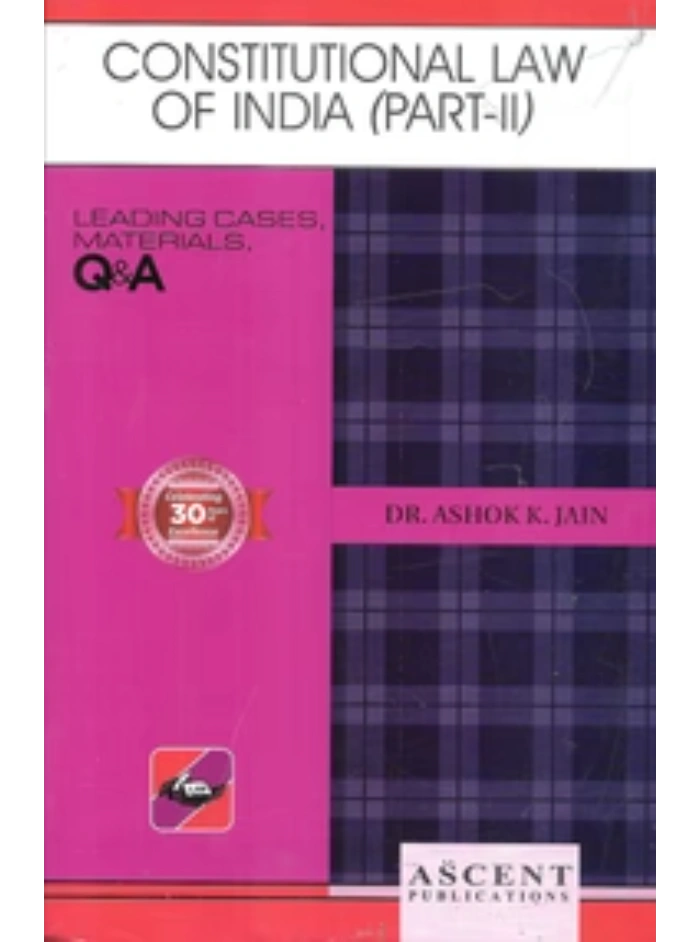
Constitutional Law of India (Part-II)
₹325.00 Original price was: ₹325.00.₹260.00Current price is: ₹260.00.
🔥 3 items sold in last 7 days
23 people are viewing this product right now
This volume on Constitutional Law of India (Part-II) provides an in-depth study of the operational aspects of the Indian Constitution, focusing on governance, constitutional bodies, and judicial interpretation. It explains the working of Parliament, the executive, federal relations, and constitutional amendments with reference to landmark judgments. Designed for law students and legal professionals, this book bridges theory and practice by combining doctrinal analysis with case law. Its systematic presentation helps readers understand constitutional principles as applied in real disputes. The book is an essential academic and professional resource for mastering advanced constitutional concepts.
In stock
SKU:
NP4945
Categories: Commentaries, Constitutional Law, Students Corner, Text Books
Brand:
Ascent Publications
Tag: Commentaries , Constitutional Law, Students Corner , Text books
Estimated delivery:September 9, 2026 - September 11, 2026
| Authors of Books | Dr. Ashok K. Jain |
|---|
Must have in your Library
Constitutional Constitutional Law of India (Part-II) is a comprehensive treatise dealing with the functional and applied dimensions of the Indian Constitution. It goes beyond foundational principles and examines the structure and working of constitutional institutions, including Parliament, the President, the Prime Minister, Governors, and the judiciary. The book also analyzes Centre–State relations, emergency provisions, and the amendment process under Article 368.
Special emphasis is laid on constitutional interpretation by the Supreme Court of India. Through discussion of landmark judgments, the book demonstrates how constitutional doctrines evolve in response to political, social, and economic challenges. Topics such as judicial review, federalism, separation of powers, and constitutional morality are explained with clarity and precision.
Written in an accessible yet authoritative style, this volume is particularly useful for advanced law students preparing for university examinations and competitive legal tests. Practicing advocates and judicial aspirants will also benefit from its structured treatment of constitutional provisions supported by case law.
The book stands out for its balance between theory and practice. While it explains constitutional concepts in a systematic manner, it also shows how these principles operate in real disputes before courts. It is an indispensable reference for anyone seeking a deeper understanding of Indian constitutional governance and judicial interpretation.Law of India (Part-II) is a comprehensive treatise dealing with the functional and applied dimensions of the Indian Constitution. It goes beyond foundational principles and examines the structure and working of constitutional institutions, including Parliament, the President, the Prime Minister, Governors, and the judiciary. The book also analyzes Centre–State relations, emergency provisions, and the amendment process under Article 368.
Special emphasis is laid on constitutional interpretation by the Supreme Court of India. Through discussion of landmark judgments, the book demonstrates how constitutional doctrines evolve in response to political, social, and economic challenges. Topics such as judicial review, federalism, separation of powers, and constitutional morality are explained with clarity and precision.
Written in an accessible yet authoritative style, this volume is particularly useful for advanced law students preparing for university examinations and competitive legal tests. Practicing advocates and judicial aspirants will also benefit from its structured treatment of constitutional provisions supported by case law.
The book stands out for its balance between theory and practice. While it explains constitutional concepts in a systematic manner, it also shows how these principles operate in real disputes before courts. It is an indispensable reference for anyone seeking a deeper understanding of Indian constitutional governance and judicial interpretation.
| Authors of Books | Dr. Ashok K. Jain |
|---|
Be the first to review “Constitutional Law of India (Part-II)” Cancel reply
Featured Products
The Intersection of Law and Artificial Intelligence
🔥 4 items sold in last 7 days
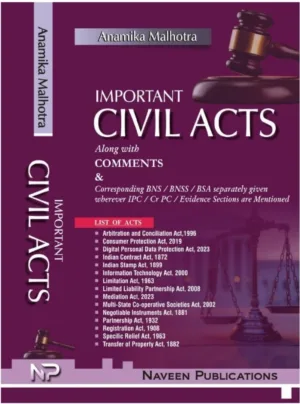
Important Civil Acts covering 15 Acts
🔥 5 items sold in last 7 days
Rated 5.00 out of 5
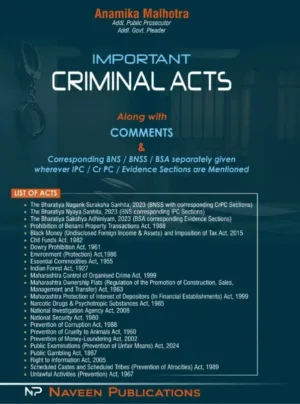
Important Criminal Acts covering 25 Acts
🔥 6 items sold in last 7 days
Criminology & Penology
🔥 6 items sold in last 7 days
Media Laws
🔥 6 items sold in last 7 days
Reviews
There are no reviews yet.