No products in the cart.

Shopping cart (0)
Subtotal: ₹0.00
Spend ₹350.00 to get free shipping
Congratulations! You've got free shipping.
Menu
Category
- Advocate Office Essentials
- Apparels – Judges, Sr. Counsel and Lawyers
- Artifacts / Gift Items
- Bare Acts – Central
- Bare Acts – State
- Commentaries
- Administrative Law
- Agriculture
- Arbitration
- Banking Law
- Biographies
- Civil Law
- Company Law
- Constitutional Law
- Consumer Law
- Contract Law
- Corporate Law
- Court Rules
- Criminal Law
- Cyber Law
- Family Law
- Intellectual Property
- Labour & Service Law
- Drafting, Pleading and Conveyancing
- Child Advocacy & POCSO
- Bankruptcy & Insolvency
- Shipping & Maritime Law
- Medical Law
- Motor Vehicles Law
- Others
- Tax Laws
- Dictionaries
- Digest
- Journals
- Regional
- Students Corner
- Trophies
- International Books
No products in the cart.
Shopping cart (0)
Subtotal: ₹0.00
Spend ₹350.00 to get free shipping
Congratulations! You've got free shipping.

No products in the cart.
Shopping cart (0)
Subtotal: ₹0.00
Spend ₹350.00 to get free shipping
Congratulations! You've got free shipping.
Menu
Categories
- Advocate Office Essentials
- Advocates Shop
- Apparels - Judges, Sr. Counsel and Lawyers
- Apparels - Judges,Sr. Counsel and Lawyers
- Artifacts / Gift Items
- Bare Acts - Central
- Bare Acts - State
- Civil Laws
- Commentaries
- Administrative Law
- Agriculture
- Arbitration
- Banking Law
- Bankruptcy & Insolvency
- Biographies
- Child Advocacy & POCSO
- Civil Law
- Company Law
- Constitutional Law
- Consumer Law
- Contract Law
- Corporate Law
- Court Rules
- Criminal Law
- Cyber Law
- Drafting, Pleading and Conveyancing
- Family Law
- Intellectual Property
- Labour & Service Law
- Medical Law
- Motor Vehicles Law
- Others
- Shipping & Maritime Law
- Tax Laws
- Decor
- Dictionaries
- Digest
- Exclusive Collection
- International Books
- Journals
- Regional
- Software
- Students Corner
- Trophies
- Uncategorized
Sale

An Essay Concerning Human Understanding Edition 2025,PB
₹895.00 Original price was: ₹895.00.₹716.00Current price is: ₹716.00.
🔥 2 items sold in last 7 days
13 people are viewing this product right now
An Essay Concerning Human Understanding is a foundational philosophical work that explores how humans acquire knowledge, think, and understand the world. Written in a clear and analytical style, the book challenges the idea of innate ideas and emphasizes experience as the basis of knowledge. It covers topics such as perception, reasoning, language, and the limits of human understanding. Ideal for students of philosophy, psychology, and political science, this classic text provides deep insights into human cognition and remains highly influential in modern thought and education.
In stock
Estimated delivery:November 9, 2026 - November 11, 2026
| Authors of Books | John Locke |
|---|
Must have in your Library
An Essay Concerning Human Understanding (Edition 2025) by John Locke is one of the most important works in Western philosophy. It lays the foundation for empiricism, the theory that knowledge comes primarily from sensory experience rather than innate ideas. Locke systematically examines how humans acquire knowledge, beginning with the mind at birth as a “blank slate” (tabula rasa). He explains how ideas are formed through experience, reflection, perception, and reasoning. The book also explores the nature of language, identity, and the limits of human understanding. A key contribution of this work is its rejection of innate knowledge, arguing instead that all ideas originate from experience. Locke’s analysis influenced later philosophers, psychologists, and political thinkers, shaping modern epistemology and liberal thought. Written in a logical and structured manner, the book remains essential reading for students of philosophy, psychology, and social sciences. It encourages critical thinking and deeper reflection on how humans perceive and interpret reality. Overall, this classic work continues to be highly relevant, offering timeless insights into the nature of knowledge and human understanding.
| Authors of Books | John Locke |
|---|
Be the first to review “An Essay Concerning Human Understanding Edition 2025,PB” Cancel reply
Featured Products
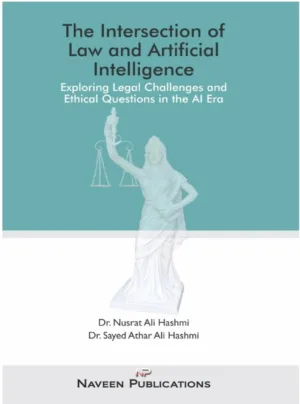
The Intersection of Law and Artificial Intelligence
🔥 3 items sold in last 7 days
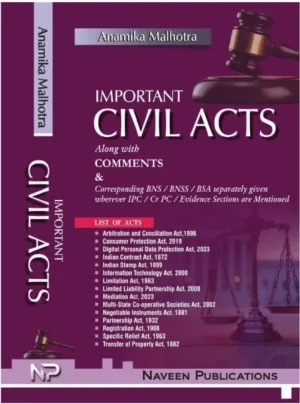
Important Civil Acts covering 15 Acts
🔥 6 items sold in last 7 days
Rated 5.00 out of 5
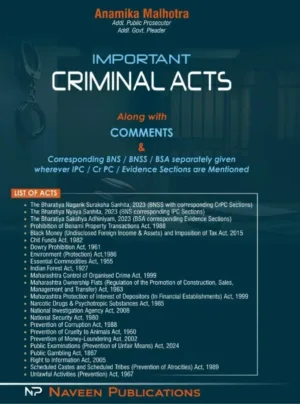
Important Criminal Acts covering 25 Acts
🔥 7 items sold in last 7 days
Criminology & Penology
🔥 2 items sold in last 7 days
Media Laws
🔥 3 items sold in last 7 days
Reviews
There are no reviews yet.